How to Win South African Government Tenders: A Complete Guide for 2026
Step-by-step guide to bidding on and winning South African government tenders compliance documents, CSD registration, B-BBEE scoring, the 80/20 system and how to find opportunities before your competitors do.
At a glance
Start with the official tender notice: check eligibility, compulsory briefings, required registrations and the submission deadline. Prepare the evidence and pricing requested in that specific bid pack, then submit by the issuer's prescribed method. No search service can guarantee an award.
This is independent guidance from TenderSearch SA, not advice from a government authority. Verify current requirements with the issuer and these official references: National Treasury Central Supplier Database · National Treasury eTenders.
South Africa's government spends well over R1 trillion every year buying goods, services and construction work from private companies. If you've ever wondered how some businesses seem to win those tenders again and again while you can't even find them on time, this guide is for you.
What "winning a government tender" actually means
A tender is just a structured procurement process. A department, municipality or State Owned Enterprise writes a specification of what it needs, publishes it, accepts sealed bids by a deadline, evaluates them on a fixed scorecard and awards a contract to the bidder that offers the best combination of price and B-BBEE/functional scoring. Winning is not luck. It is the discipline of finding the right opportunities early, qualifying them and submitting compliant, competitive bids repeatedly.
Step 1: Get your house in order before you bid
Most tenders are lost on compliance, not price. Before you chase a single opportunity, make sure you have all of the following ready as certified copies (most expire diary the dates):
- CIPC company registration documents
- Valid SARS Tax Compliance Status (TCS) PIN
- B-BBEE certificate or sworn affidavit (EME/QSE)
- CSD (Central Supplier Database) registration and MAAA number
- Letter of good standing from the Compensation Fund
- Bank confirmation letter (less than 3 months old)
- For construction: CIDB grading and CKxxxxxx registration
- Valid municipal rates account or lease at your business address
Without these you cannot even reach the price evaluation stage. The bid will be ruled non-responsive and rejected without being opened.
Step 2: Find tenders early not on the closing day
Government opportunities are scattered across more than 50 different websites: National Treasury's eTender portal, the Government Tender Bulletin, every provincial treasury, every metro and every State Owned Enterprise. Most tenders give you 21 days to respond. If you find them on day 19 you will lose to bidders who saw them on day one.
This is the single biggest predictor of success. The companies that win consistently are not the ones with the lowest prices they are the ones who saw the brief in time to ask clarifying questions, attend the compulsory briefing and put a real proposal together.
Step 3: Qualify ruthlessly
You cannot bid for everything. For each tender ask:
- Do I meet every minimum requirement, including CIDB grade?
- Is my B-BBEE score competitive against likely bidders?
- Can I deliver at the required scale without sub-contracting?
- Is the margin worth my time at the budgeted unit price?
- Is there a compulsory briefing I can attend?
A "no" on any of these usually means walking away. Spending two days compiling a beautiful proposal you can never win is the most expensive mistake small businesses make.
Step 4: Read the entire bid document, twice
Specifically watch for:
- The 80/20 vs 90/10 preference points system being applied
- Local content requirements (designated sectors)
- Lawful tender-specific eligibility conditions and any clarification needed
- Published specific goals, proof and any tender-specific subcontracting obligations—not a universal 30% rule
- SBD forms every blank line must be filled in or initialled
Step 5: Price competitively, not desperately
On applicable 80/20 acquisition contracts (at or below R50 million inclusive of applicable taxes) price is worth 80 of the 100 points. The lowest compliant bid gets all 80; everyone else loses roughly 0.8 points per 1% they are above lowest. On 90/10 contracts (over R50 million) it's even more brutal. Build a real cost model. Include on-site supervision, insurance, retention, performance guarantees and the cost of money tied up while you wait 30+ days for payment.
Step 6: Submit early, in person where required
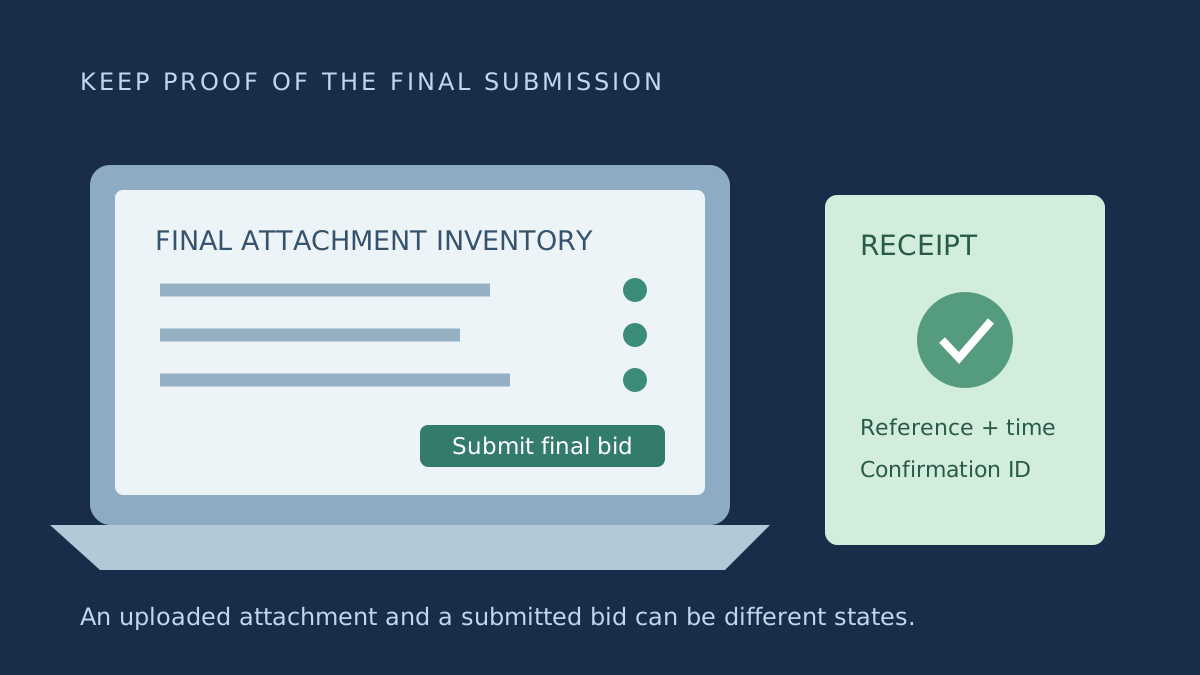
If the bid says "submit at the bid box at Building X, Floor 2, before 11:00", that is a hard deadline. Tenders submitted at 11:01 are rejected, full stop. Always allow 2 hours for traffic and parking. Always get a stamped receipt.
How TenderSearch SA helps
Search South African government tender notices from national, provincial, municipal and state-owned enterprise sources in one place. Starter costs R129 a month for search and up to 10 watchlist saves. Professional at R299 a month adds daily keyword email alerts and closing-date reminders for saved tenders. Always verify the official notice, requirements and deadline with the issuer. Cancel anytime from your dashboard.
Found this useful? Share it with another business — it costs you nothing and helps us reach more South African bidders.
Put your bid preparation into practice
Browse public tender previews, check the official requirements, then shortlist opportunities that fit your business. Starter is R149/month for search and saves. Professional at R299/month adds daily keyword email alerts, unlimited saves and closing-date reminders.
Compare tender subscription plans