How to Read a South African Government Tender Document: A First-Timer's Guide to SBD Forms, Scope of Work and BoQ
Plain-English walk-through of every section of a South African government tender document Tender Notice, SBD forms, Conditions of Contract (GCC/NEC/JBCC/FIDIC), Scope of Work, Pricing Schedules and Annexures plus the 10 things to extract on first read to qualify or drop a bid.
At a glance
Read the scope of work, mandatory eligibility, evaluation criteria, pricing schedule and submission instructions before preparing a bid. Record the closing date and any compulsory briefing, then check the issuing organisation's amendments for changes.
This is independent guidance from TenderSearch SA, not advice from a government authority. Verify current requirements with the issuer and these official references: National Treasury eTenders — official bid notices.
A South African government tender document is intimidating the first time you open one. They run 80 to 300 pages, packed with SBD forms, scope of work, pricing schedules, conditions of contract, technical specifications and attachments. This guide walks you through each section in order, what to look for and how to extract the 10 critical pieces of information that determine whether you should bid at all let alone how to price and respond.
Why government tender documents are so long
Every government tender must comply with the Public Finance Management Act (PFMA) or the Municipal Finance Management Act (MFMA), the Preferential Procurement Policy Framework Act (PPPFA), the B-BBEE Act and the buyer's own SCM policy. Each of those adds standard clauses, forms and disclosures. So the same 20-page commercial document gets bundled with 200 pages of regulatory boilerplate. The skill is knowing what to skim, what to read carefully and what to print and analyse line-by-line.
The 6 standard sections of a SA tender document
- Section A: Tender Notice and Cover Page
- Section B: Standard Bidding Documents (SBD forms)
- Section C: Conditions of Contract (GCC, NEC, JBCC, FIDIC)
- Section D: Specifications / Scope of Work
- Section E: Returnable Schedules and Pricing Schedule (BoQ)
- Section F: Annexures
Some buyers number them differently (1–6, I–VI, etc.), but the content is broadly the same.
Section A: Tender Notice and Cover Page
Read this first. In 5 minutes you should be able to extract:
- Bid number (e.g. NT/SCM-23/2026)
- Bid description one-line scope
- Procuring entity which department or municipality
- Closing date and time your hard deadline
- Place and method of submission bid box, email, eTender portal
- Compulsory briefing date and venue if any
- Validity period usually 90 days; you can't withdraw
- Bid security / deposit required guarantee, if any
- Functionality / quality threshold minimum score before price evaluation
- Preference points system 80/20 or 90/10
- Pre-qualification criteria B-BBEE level, CIDB grade, locality
- Specific goals points allocation
On the basis of these 12 items alone you should already be able to decide: do I qualify, can I deliver, is there a budget I can profit at? If any answer is "no", stop here and don't waste another hour.
Section B: SBD forms the compliance gate
SBDs are the standardised forms every government tender uses. The most important ones:
- SBD 1 Invitation to Bid: bidder details, bid validity, declaration of authority. Sign it.
- SBD 2 Tax Clearance: your TCS PIN goes here. SARS verifies live.
- SBD 3.1 Pricing Schedule: for goods and services. Price escalation clause.
- SBD 3.2 Pricing Schedule: firm-price version (no escalation).
- SBD 4 Declaration of Interest: any state employee shareholding, family connections to officials, previous awards.
- SBD 6.1 Preference Points Claim Form:B-BBEE certificate level, ownership claims, specific goals. The form that scores you the 20 (or 10) preference points.
- SBD 6.2 Subcontracting Declaration:required where subcontracting set-asides apply.
- SBD 7 Contract Form: goods and services. Sign at award.
- SBD 8 Declaration of Bidder's Past SCM Practices:any prior tender abuse, fronting, restrictions. Lying here is a serious offence.
- SBD 9 Certificate of Independent Bid Determination:collusion declaration. Signing falsely is a Competition Act offence.
Every blank line on every SBD form must be filled in or marked N/A. Every signature line signed. Every initial block initialled on every page. SCM officers genuinely page-flip and check. Missing initials are the #1 reason small bids are tossed.
Section C: Conditions of Contract
Government uses several standard contract suites depending on the type of work:
- GCC 2015 General Conditions of Contract for Construction (most municipal infrastructure)
- NEC3 / NEC4 international engineering contracts (used by SANRAL, Eskom, Transnet)
- JBCC Joint Building Contracts Committee (most building works)
- FIDIC international civils (large dam, road, rail projects)
- SLA / GCC for Services non-construction professional services
The conditions of contract determine: payment terms, retention rates, performance guarantees, penalty clauses, dispute resolution, defects-liability period and risk allocation. They are usually published unmodified but check the Special Conditions of Contract (a thin document in Section C) which can override or amend any clause. The Special Conditions almost always shift risk onto the contractor. Read them slowly.
Section D: Scope of Work / Specifications
This is the section that determines whether you can actually do the job. Look for:
- Functional / quality criteria what minimum score (e.g. 70/100) you must reach to even qualify for price scoring
- Technical specification documents equipment standards, SANS references, delivery timelines, performance requirements
- Site information location, conditions, access
- Required deliverables and milestones
- Required certifications, licences, accreditationsfor goods or service providers (e.g. SAQA for training, SAHPRA for medical, SANAS for laboratories)
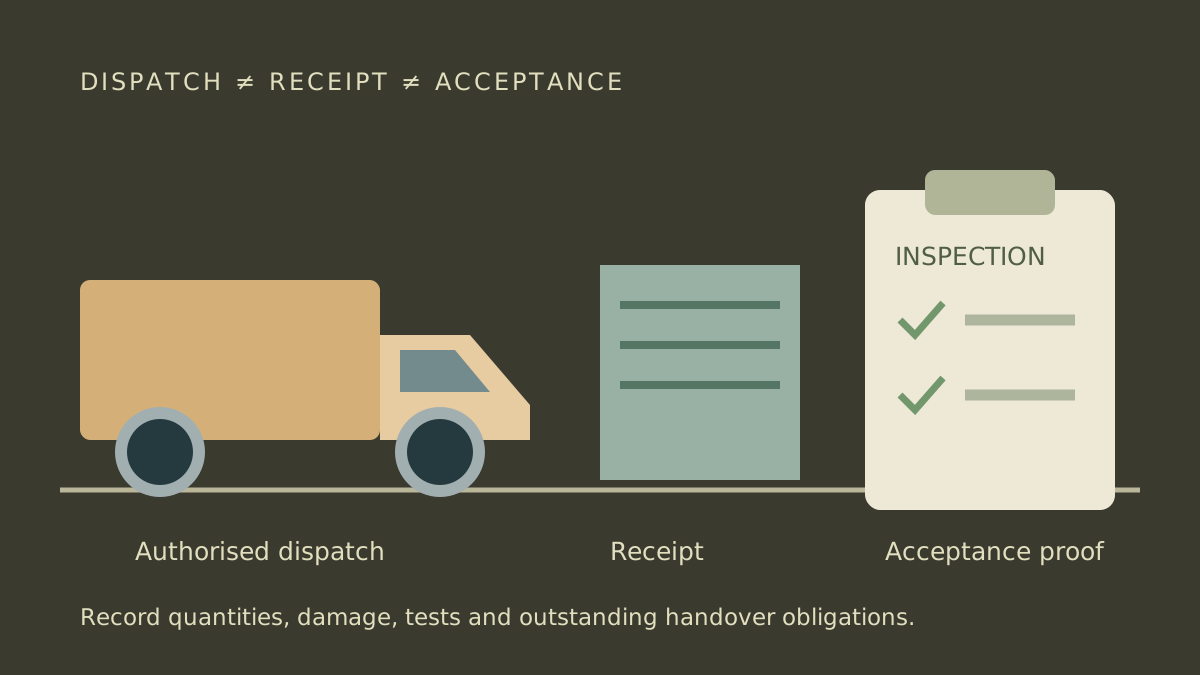
- Acceptance criteria how the buyer will confirm completion
Underline anything you don't fully understand and ask about it at the briefing.
Section E: Returnable Schedules and Pricing Schedule
Returnable schedules are documents you must complete and return with your bid. Common ones include:
- Company experience and track record
- CVs of key personnel proposed for the contract
- Certified copies of registrations (CIPC, B-BBEE, CIDB)
- Audited financial statements (last 2–3 years)
- References from past clients
- Methodology / project plan
- Risk register and mitigation plan
The Pricing Schedule (often a Bill of Quantities or BoQ) is where you actually quote. Quote in the exact format provided. Don't add line items, don't merge them, don't change units. Calculator errors here disqualify thousands of bids per year always cross-check totals.
Section F: Annexures
Includes drawings (for construction), reference data, sample forms, photographs and any past addenda. Open every drawing file. A drawing that contradicts the written scope is a clarification question waiting to happen.
The 10 things to extract from any tender on first read
- Closing date, time and submission method
- Compulsory briefing date
- Required CIDB grade and class of works (if construction)
- Lawful eligibility conditions and tender-specific goal evidence
- Any actual subcontracting participation conditions, limits and proof—not a universal 30% rule
- Functional / quality threshold and weighting
- Preference points system (80/20 vs 90/10)
- Indicative budget (if disclosed)
- Performance guarantee requirement (% and source)
- Conditions of contract suite (GCC, NEC, JBCC, FIDIC)
Pre-bid checklist before committing to write a response
- I qualify on every minimum requirement
- I can attend the compulsory briefing
- My TCS PIN is currently green
- My B-BBEE certificate is in date
- My CSD profile is in date
- I have or can secure the performance guarantee
- The work fits my capacity in the contract period
- The likely margin justifies the cost of bidding
If any of these fail, walk away. Time spent on a doomed bid is time you could have spent on the next opportunity.
Practical tips for working through a tender document
- Print or use a tablet. Trying to navigate a 200-page PDF on a 13-inch laptop slows you down.
- Use a colour-code system. Yellow for questions, pink for risks, green for "clear and confirmed".
- Build a single index. Note where every key requirement lives so you can find it again during proposal writing.
- Tab the SBD forms. Don't scroll back and forth bookmark each form and complete them last.
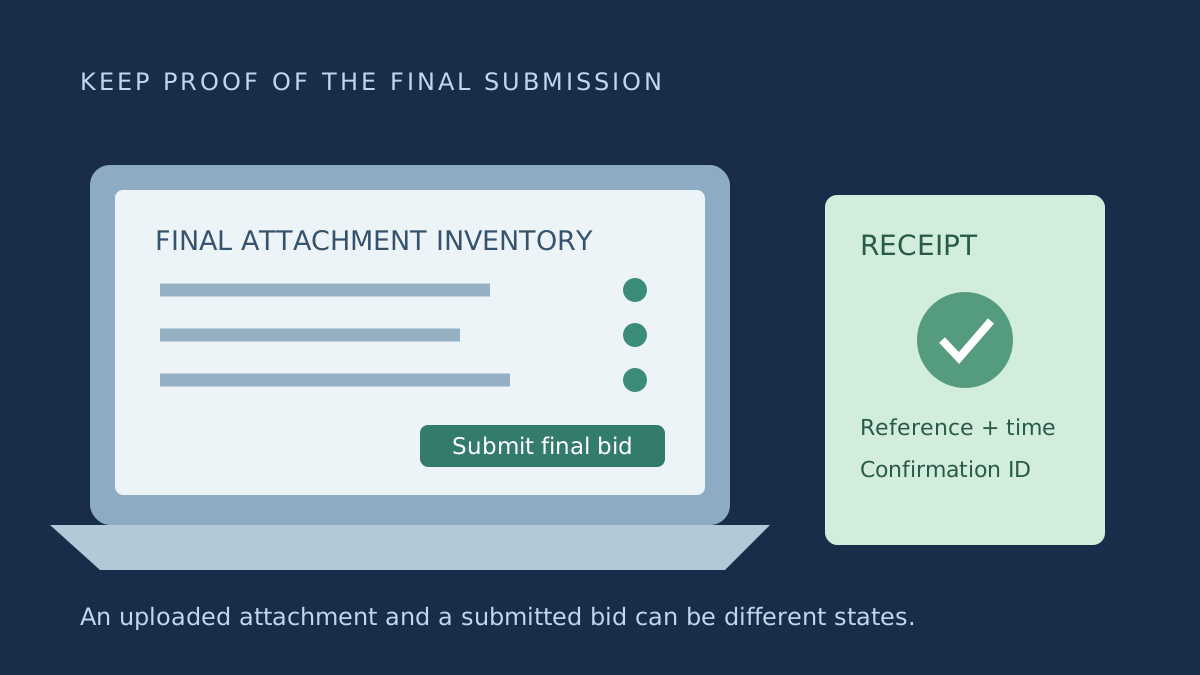
- Track addenda separately. Print every addendum as it's released and clip it into the bid pack.
How TenderSearch SA helps
Reading 5–10 tender documents per week to qualify them is unsustainable for most SMMEs. We surface the qualifying details required CIDB grade, B-BBEE pre-qualification, briefing date, closing date, preference system directly in our listings so you can decide in 30 seconds whether a bid is worth opening at all. Then you only download the full tender document for the opportunities you can actually win.
Frequently asked questions
How long does it take to read a tender document?
First pass: 1–2 hours for a service contract, 3–5 hours for major construction or ICT. Second detailed pass and proposal writing typically take 2–10 working days depending on complexity.
Can I get a Word version of the bid documents?
Most government tenders are published as PDFs. SBD forms are sometimes available in editable form on the SCM department's website. For pricing schedules, the buyer often provides an Excel template — always download and use it.
What if I find an obvious error in the document?
Submit a written question during the clarification period. Don't guess what the buyer meant — your bid will be judged against the official scope, not your interpretation.
Can I bid on a tender from a different province?
Generally yes, unless the buyer has explicitly applied a local-content or geographical specific-goal that excludes out-of-province bidders. Read the SBD 6.1 carefully.
Found this useful? Share it with another business — it costs you nothing and helps us reach more South African bidders.
Put your bid preparation into practice
Browse public tender previews, check the official requirements, then shortlist opportunities that fit your business. Starter is R149/month for search and saves. Professional at R299/month adds daily keyword email alerts, unlimited saves and closing-date reminders.
Compare tender subscription plans