The Compulsory Briefing Session Explained: How to Prepare for a South African Tender Site Meeting
Everything bidders need to know about compulsory briefing sessions on South African government tenders what they are, what to bring, what to ask, how the post-briefing addendum binds your bid and the mistakes that disqualify attendees.
At a glance
If a briefing or site visit is compulsory, follow the notice's attendance, venue, time and proof-of-attendance rules. Check for official amendments before travelling. Missing a mandatory session can make a bid non-responsive, even when the rest of the submission is complete.
This is independent guidance from TenderSearch SA, not advice from a government authority. Verify current requirements with the issuer and these official references: National Treasury eTenders — official notices and amendments.
Most South African government tenders include a briefing session, and a meaningful share of those are compulsory meaning bidders who don't attend cannot bid, full stop. Yet briefings are the most under-used opportunity in the procurement cycle. They are where you meet the buyer face-to-face, see the site, identify your competitors, ask scope-defining questions and pick up the clarifications that often decide who wins. This guide explains how compulsory briefing sessions work and how to get maximum value from each one.
What is a compulsory briefing session?
A compulsory briefing (sometimes called a "site meeting" or "clarification meeting") is a formal pre-bid meeting hosted by the procuring entity. The purpose is to:
- Walk bidders through the scope of work
- Show the physical site (for construction or facilities)
- Demonstrate equipment or systems being procured
- Allow bidders to ask clarifying questions on record
- Explain how attendance and clarifications will be recorded and where official notices will be published
When the briefing is marked compulsory, follow the notice's attendance and proof requirements. The issuer may use an attendance register, certificate or another prescribed record. Missing a mandatory session or required proof can make the bid non-responsive; do not assume every issuer uses the same certificate or that a representative's presence alone satisfies every condition.
How do I find out if a briefing is compulsory?
Every published tender notice and bid document states whether briefing is compulsory. Look for the following on the cover page or executive summary:
- "Compulsory briefing session: YES" explicit flag
- "Site meeting (compulsory)" typical construction wording
- "No bid will be accepted from any bidder who did not attend the compulsory briefing" definitive
If the briefing is "non-compulsory" or "optional", attendance is recommended but not required. Even then, attending is almost always worthwhile the questions and answers issued at the briefing become part of the bid documentation that everyoneis held to.
When are briefings typically scheduled?
Most briefings happen 7–14 days after the tender publication and 7–14 days before the bid closing date. This timing matters:
- You need enough time before the briefing to have read the bid documents thoroughly and prepared questions
- You need enough time after the briefing to incorporate everything you learned into your bid response
If you only discover a tender 3 days before its briefing, your questions will be poor and your bid rushed. This is why finding tenders early is the single biggest predictor of winning — as explained in our guide on how to win South African government tenders.
How to prepare for a compulsory briefing
One week before
- Read the entire bid document every appendix, every form
- Highlight every ambiguity, contradiction, or unrealistic requirement
- Walk through the scope with whoever will actually deliver the work and capture their questions
- Confirm the venue, time and any access requirements (security clearance, PPE, RSVP)
- Confirm who from your team will attend typically a director plus a technical lead
The day before
- Print 3 hard copies of the bid documents
- Bring a notebook, pens and a phone for photos (where allowed)
- For site meetings: PPE, safety boots, hard hat, hi-viz vest, measuring tape, camera
- Plan to arrive 30 minutes early (parking, security)
What happens at the briefing
1. Registration and attendance
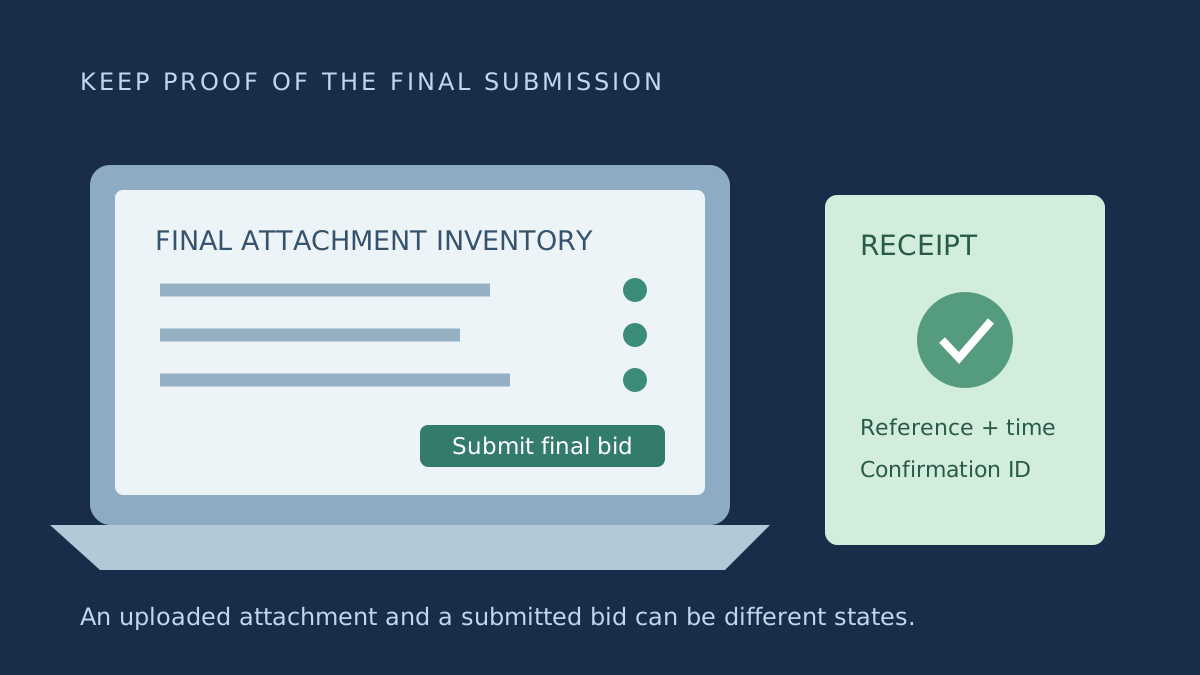
Sign the attendance register. This signature, plus your stamped attendance certificate, are what prove you attended. Do not leave the venue without your stamped certificate. If you forget, most procurement officers will issue a duplicate by email — but it's much safer to leave with the original in hand.
2. Buyer presentation
The procurement officer or end-user (the actual department receiving the goods/services) presents the scope. Take detailed notes. Note who in the room is from the end-user vs SCM the end-user often controls the technical evaluation while SCM controls the price evaluation.
3. Site walk-through (where applicable)
For construction, facilities maintenance, or installation contracts, you'll be taken on site. Things to specifically observe and photograph:
- Existing conditions and any damage you'll inherit
- Access routes for vehicles, plant and material delivery
- Available water, electricity, ablutions for site staff
- Storage and laydown areas
- Working hours restrictions (security, residents, school hours)
- Anything that contradicts the written scope
4. Question and answer
Q&A is on record. Every question you ask is heard by every competitor in the room and every answer becomes part of the bid documentation everyone is bound by. This has two implications:
- Don't ask questions that reveal your strategy or weakness ("Can we deliver in 6 months instead of 3?")
- Do ask questions that clarify ambiguity in your favour ("Is security included or do we provide it?", "Confirm if the existing electrical reticulation is in scope or excluded")
How to ask great briefing questions
- Yes/no questions get cleaner answers than open questions
- Reference the bid document by clause number so the buyer knows exactly what you mean
- Pre-write your top 5 questions the night before don't try to think them up live
- Submit complex questions in writing at the briefing rather than verbally many buyers prefer this and will issue formal written responses
- Save commercial questions for the addendum windowmost tenders accept written questions for 5–10 days after the briefing and answers are issued as a formal addendum
The post-briefing addendum
Monitor the issuer's published clarification and amendment channel after the briefing. There is no universal 5–10-day publication window. A formal addendum may contain:
- Minutes of the briefing
- List of attendees
- All written and verbal questions and the formal answers
- Any scope or specification changes
- Sometimes an extended closing date
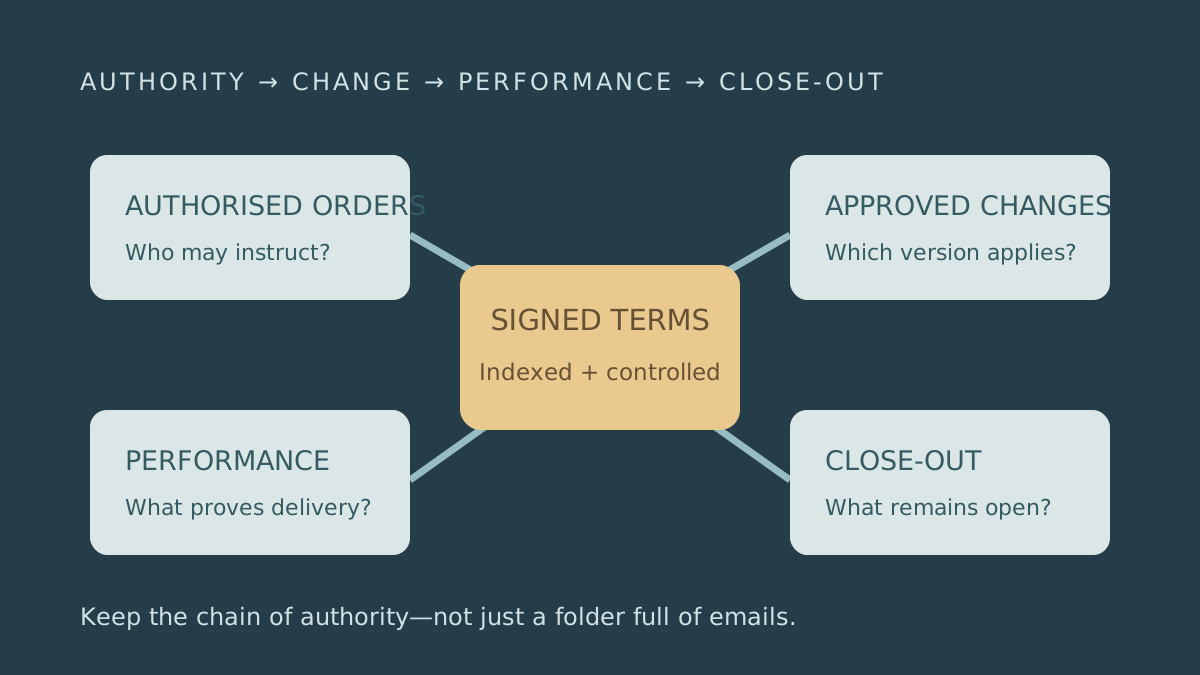
This addendum is binding. Read it the day it's issued it can completely change your pricing, your bill of quantities, or even the qualifying CIDB grade.
Briefing-day mistakes to avoid
- Arriving late. Many briefings close their attendance registers on the dot. Arriving 10 minutes after the start can cost you the right to bid.
- Sending an unauthorised junior. Some buyers require attendees to be company representatives with authority. A receptionist signing on the company's behalf can be challenged.
- Not collecting the attendance certificate. The original stamped certificate is your only proof. Photo or email copies sometimes get rejected by SCM.
- Showing all your strategy questions in public.Save your sharpest commercial questions for written submission where only the buyer reads them first.
- Not networking. Briefings are where you meet potential JV partners, sub-contractors and suppliers who can support your bid. Bring business cards.
- Missing the addendum. Bidders have lost tenders by submitting against the original brief without incorporating addendum changes.
Virtual briefings: a post-2020 reality
Many briefings are now hosted on Microsoft Teams, Zoom, or Google Meet. The same compulsory rules apply you must register, attend the full session and obtain proof of attendance (often a screenshot of the attendee list plus an emailed certificate). Test your audio/video the day before, dial in 15 minutes early, and take screenshots throughout the session. For virtual briefings, ask the buyer up front how attendance will be proven.
How TenderSearch SA helps
We highlight every tender that has a compulsory briefing date so you don't miss it. Briefing dates are also surfaced in the keyword-alert email if a matching tender publishes today and the briefing is in 5 days, you'll know immediately and have time to register and prepare. The fastest way to lose a winnable tender is to find it the day before the briefing.
Frequently asked questions
Can someone else attend on my behalf?
Usually yes — any authorised representative of your company. You may need to bring a board resolution or letter of authority for that person. Read the bid document for the specific requirement.
Can I bid if I missed a compulsory briefing?
Missing a mandatory session can make a bid non-responsive. Check the issuer's actual attendance requirements and any formal amendment; do not assume an informal excuse or substitute session will be accepted.
What if the briefing is rescheduled?
Monitor the issuer's official notices for the revised arrangements. Do not assume a universal 2–3-day notice rule or rely only on an informal message; verify the applicable amendment before travelling.
Are minutes and addenda always issued after a briefing?
Publication practices depend on the issuer and process. Ask where clarifications and addenda are published and check that official channel; attendance alone does not establish that you have every later amendment.
Found this useful? Share it with another business — it costs you nothing and helps us reach more South African bidders.
Put your bid preparation into practice
Browse public tender previews, check the official requirements, then shortlist opportunities that fit your business. Starter is R149/month for search and saves. Professional at R299/month adds daily keyword email alerts, unlimited saves and closing-date reminders.
Compare tender subscription plans