Joint Ventures and Subcontracting on South African Government Tenders: When, How and Pitfalls to Avoid
Plan genuine joint ventures and subcontracting for South African tenders: verify tender-specific eligibility, CIDB requirements, work allocation and agreements without assuming a universal 30% subcontracting rule.
At a glance
Check whether the tender permits a joint venture or subcontracting and what agreements, registrations and evidence each participant must supply. Do not assume that combining businesses automatically satisfies eligibility, CIDB grading or preference-point requirements.
This is independent guidance from TenderSearch SA, not advice from a government authority. Verify current requirements with the issuer and these official references: Construction Industry Development Board · Preferential Procurement Regulations 2022: tender-specific goals and proof.
A partnership can add real delivery capacity, but it does not automatically cure a tender's eligibility gaps. Before choosing a joint venture or subcontract, establish what the issuer permits, which entity will bid and how each participant's work, evidence and liability will be treated. A good agreement reflects actual delivery, not merely a desired preference score.
Joint venture and subcontract are different relationships
A joint bid involves participants offering through the structure declared in the submission. A subcontract normally supports a prime contractor that contracts with the buyer. The exact legal form, authority, liability and approvals depend on the agreements and tender conditions. Do not assume that an informal understanding between owners creates the structure the issuer requires.
Read whether joint bids are allowed, whether an agreement must be signed by closing, which party leads communication and what each participant must submit. For subcontracting, check whether named providers, consent or replacement restrictions apply. A prime contractor remains accountable under its contract even when another business performs part of the work.
No universal 30% subcontracting rule
The Preferential Procurement Regulations 2022 do not impose a blanket requirement that every tender subcontract 30% of its value. Do not import historical requirements or draft reform proposals into every present bid. Identify the actual lawful participation condition, scope, eligible group and proof in the tender, and obtain advice where it is unclear.
Subcontracting also does not automatically earn additional preference points. Regulation 3 requires the tender's specific goals, allocations and proof to be stated. A participant's B-BBEE level is not a universal substitute for the evidence required for a joint bid. Ask the issuer to clarify ambiguous schedules rather than averaging certificates yourself.
Verify construction eligibility independently
For construction, check the required class of works, grading and tender conditions against current CIDB requirements. Use the CIDB's official guidance and tools for joint-venture assessment. Do not add grading numbers or apply an improvised weighted-average formula. The class, partners' registrations and prescribed assessment method matter.
Confirm which registrations and evidence each partner must hold and what the tender requires of the combined structure. A high-grade partner's presence does not by itself establish that any proposed split qualifies. Resolve eligibility before investing in a detailed price or committing resources.
Put real responsibilities into the agreement
- Identify the parties, bidding entity and authorised representatives.
- Define scope, deliverables, staff, equipment and working-capital contributions.
- Allocate pricing responsibility, payment flows, profit or loss and accounting records.
- Set decision powers, signing limits and approval of changes.
- Address insurance, security, liability, disputes, withdrawal and completion obligations.
Have a qualified adviser review the agreement and its consistency with the tender. A percentage split alone does not explain who funds materials, carries delayed-payment risk or repairs defects. Distinguish a participant's commercial share from its actual performance and legal exposure.
Check integrity and evidence
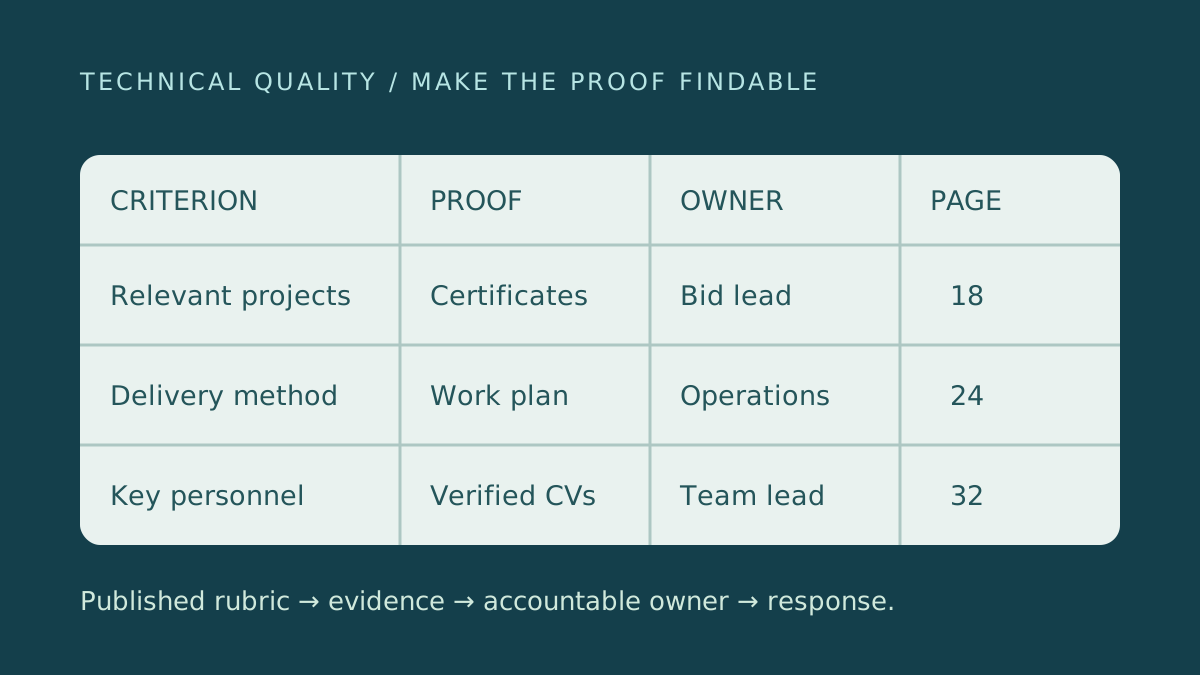
Verify each partner's legal identity, registrations, genuine experience and available capacity. Obtain permission for reference contacts and personal evidence. Do not present a subcontractor's full corporate history as the prime's own, or imply that a partner performed work it did not perform.
Fronting and misleading declarations create serious legal risk. Seek specialist advice rather than relying on a nominal empowered participant who has no genuine role. Genuine collaboration must also respect competition law; exchanging future prices with competitors outside what is necessary for a lawful joint bid can be problematic. See our independent-bidding guide.
Test the arrangement with a delivery scenario
Illustrative example: two businesses plan a facilities contract. One supplies mobile teams, while the other provides a specialist service and equipment. Before bidding, they confirm the tender permits the arrangement, verify registrations, agree who responds to urgent calls and document payment and replacement rules. They calculate preference claims only from the published schedule. The example illustrates planning, not automatic eligibility.
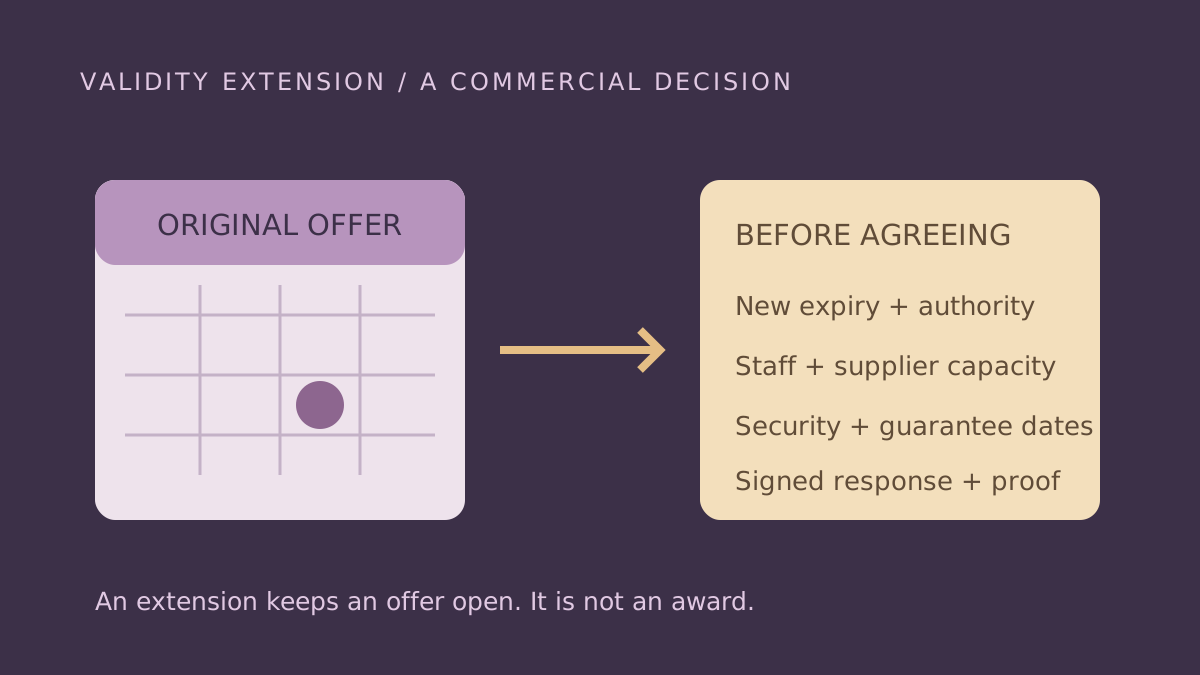
Before submission, reconcile the agreements, entity details, pricing and technical proposal. Obtain actual commitments from named participants and keep the signed records. After award, follow the contract's approval process for changes; replacing a partner or subcontractor is not automatically permitted simply because the original participant becomes unavailable.
For next steps, read the CIDB guide, the technical evidence workflow and the issuer's full conditions. No partnership structure or subscription guarantees an award.
Frequently asked questions
Can I form a JV after I've already submitted a bid?
No. The JV must exist and be declared at submission. Forming one after award (often called "buyer-induced JV") only happens with the buyer's express consent and is rare.
Do JV partners need to be in the same province?
No, unless the tender brief specifies a local-content rule. Cross-province JVs are common, especially in construction and consulting.
Does subcontracting affect my preference points?
Only the tender's published specific-goal schedule determines available points and proof. Subcontracting does not automatically earn additional points, and there is no universal 30% requirement under the 2022 regulations.
Can a Generic enterprise lead a JV with an EME?
Yes, but the EME must be doing genuine work. Many tenders require the EME / QSE participation to be formally documented in the JV agreement with deliverables.
Found this useful? Share it with another business — it costs you nothing and helps us reach more South African bidders.
Put your bid preparation into practice
Browse public tender previews, check the official requirements, then shortlist opportunities that fit your business. Starter is R149/month for search and saves. Professional at R299/month adds daily keyword email alerts, unlimited saves and closing-date reminders.
Compare tender subscription plans